Free shipping on orders $75 and up!

TIBETAN SPIRIT TRAVELS
Bhutan, Feb 27 - Mar 10, 2026
WHERE THE THUNDER DRAGON ROARS
A Spiritual Journey to the Last Himalayan Buddhist Kingdom
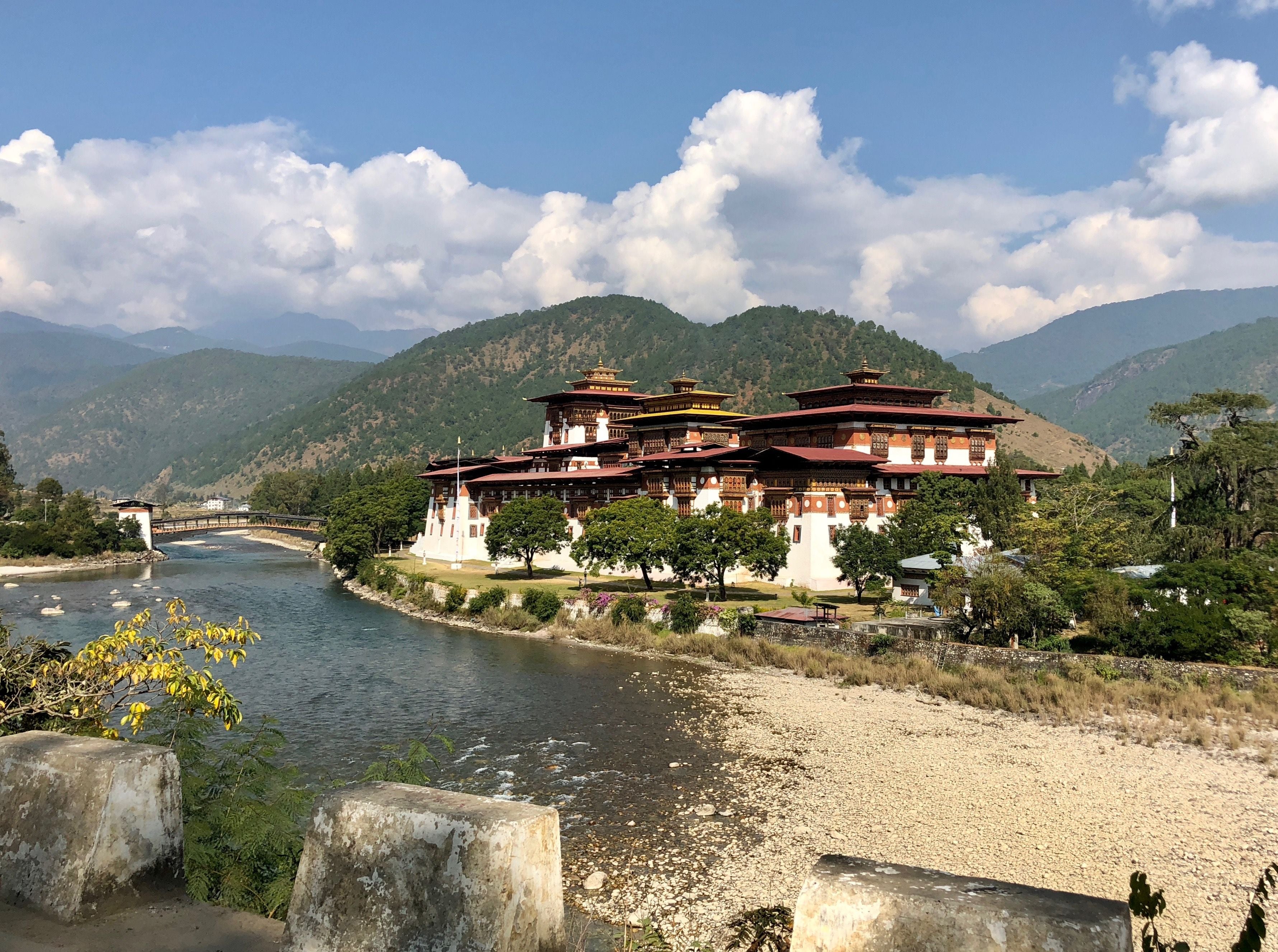
The Kingdom of Bhutan is a landlocked nation located in the Himalayan mountain range and the only official Buddhist nation in the world. Made famous to the outside world when the previous king declared his country as the nation where “gross national happiness” matters more over other conventional measures of success, this “last Shangrila” has a lot to offer the world. From Bhutan’s stunning dzongs – a unique combination of monastery, city hall and fortress – to its steep and high mountains crisscrossing by networks of swift rivers, its diverse eco-systems (in alpine, temperate and sub-tropical zones) populated by yaks, snow leopards, blue sheep, red pandas, takins, marmots, musk deer, black-necked cranes, and white bellied herons to its unique Himalayan Buddhist population negotiating a balanced existence between the outside world and its own values and visions.
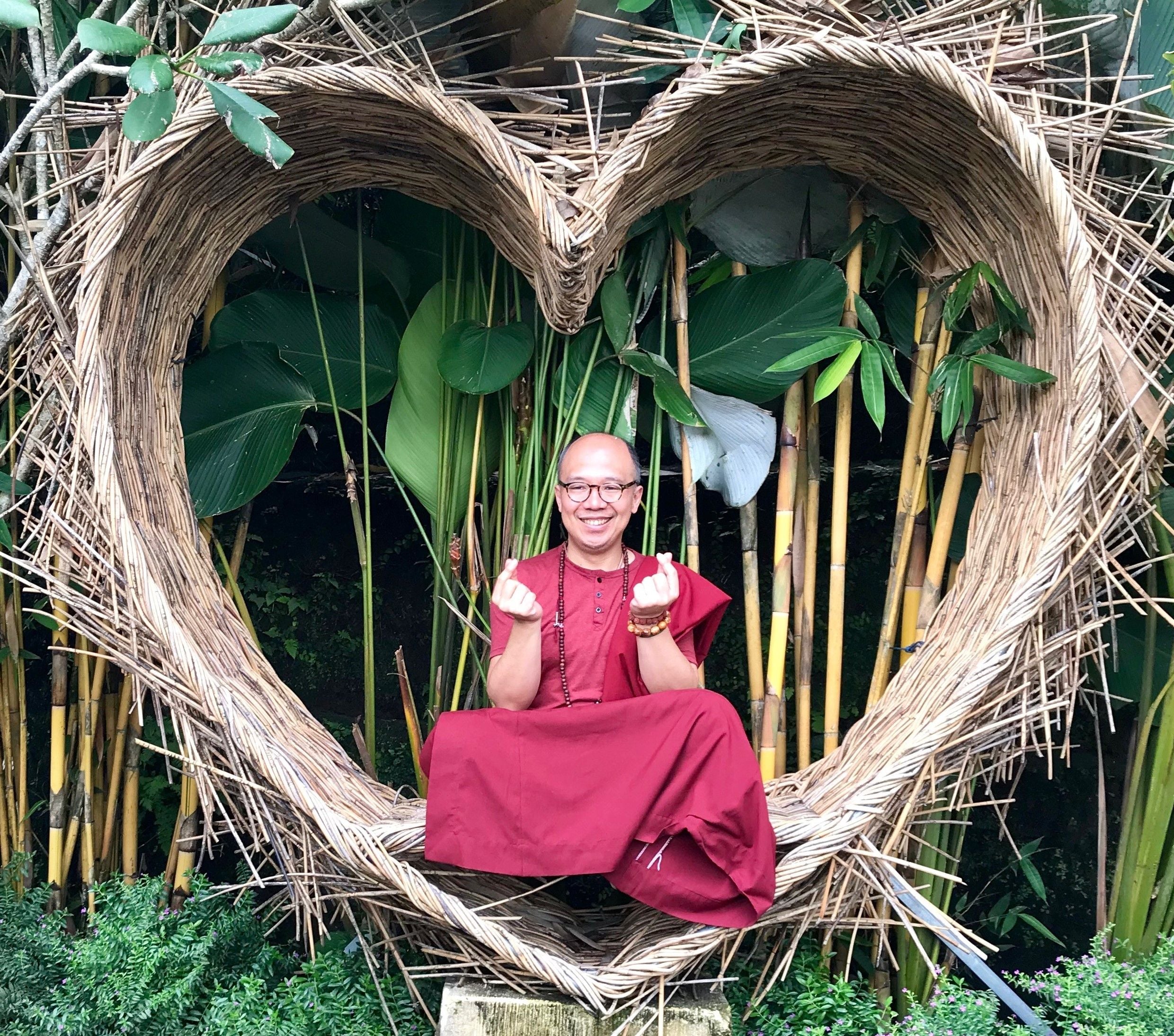
Dr. Hun Lye
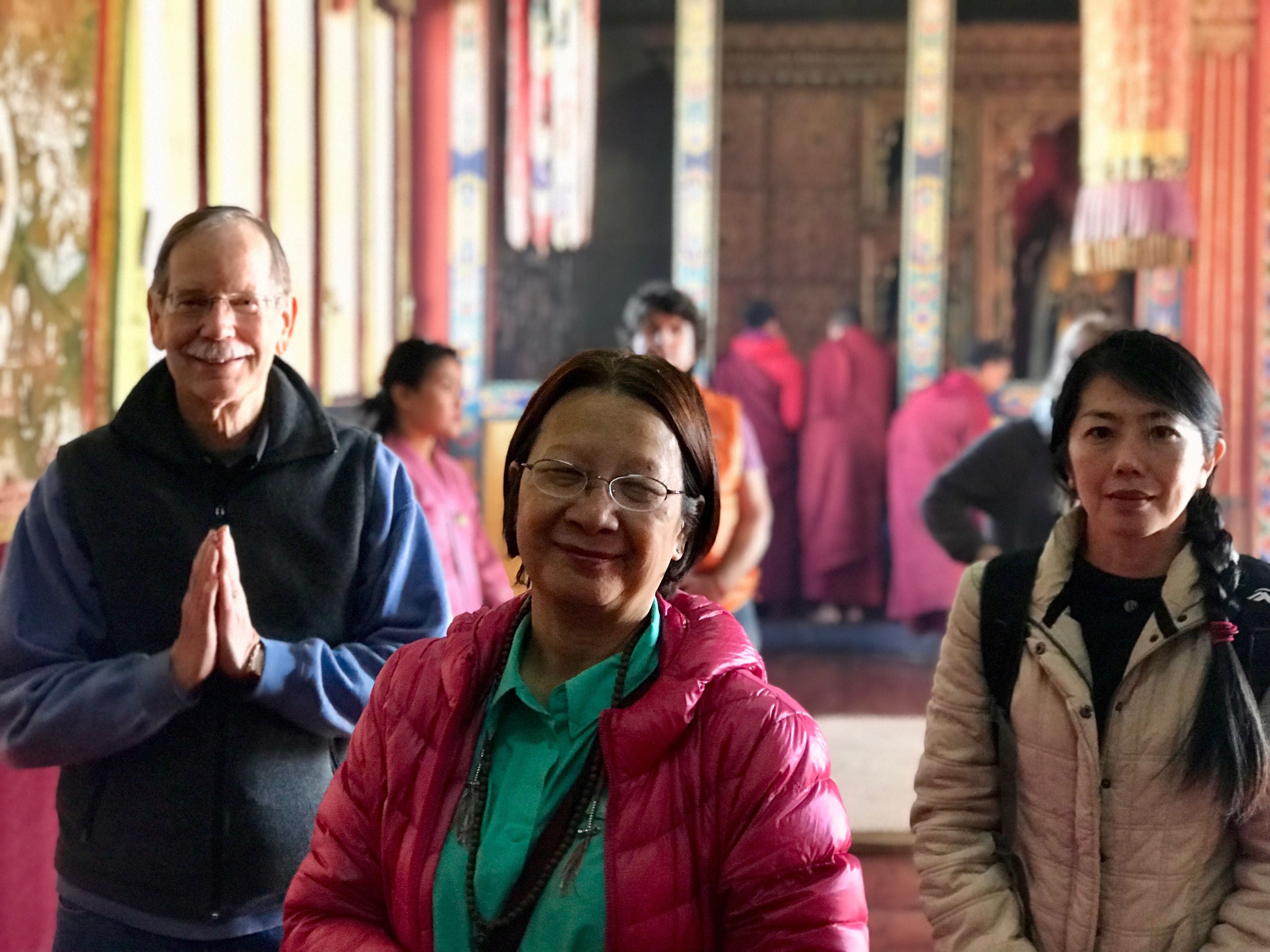
For twelve days, Dr. Lye (a specialist in Buddhist Studies & founder, spiritual director of Urban Dharma NC) will be our guide through this Himalayan kingdom, visiting spiritual & power-places established by Guru Rinpoche and other great practitioners. Assisted by local guides and experts, Dr. Lye will open windows into the deep spiritual heritage and rich natural and cultural lives of Bhutan that are not often available to outsiders. As a general rule, Dr. Lye only takes groups to countries and cultures where he has a special “back-story” to offer and this special tour of Bhutan is no exception. Aside from Dr. Lye’s professional training, his own spiritual grounding is in the Kagyu Lineage of Himalayan Buddhism that is also the official form of Buddhism in Bhutan.
On this pilgrimage, we will have daily meditation, teachings & instructions from Dr. Lye as well as special prayers & rituals offered at the sacred sites.
Program Overview
• 12-day all-inclusive tour, limited to 25 participants
• Covering western & central Bhutan
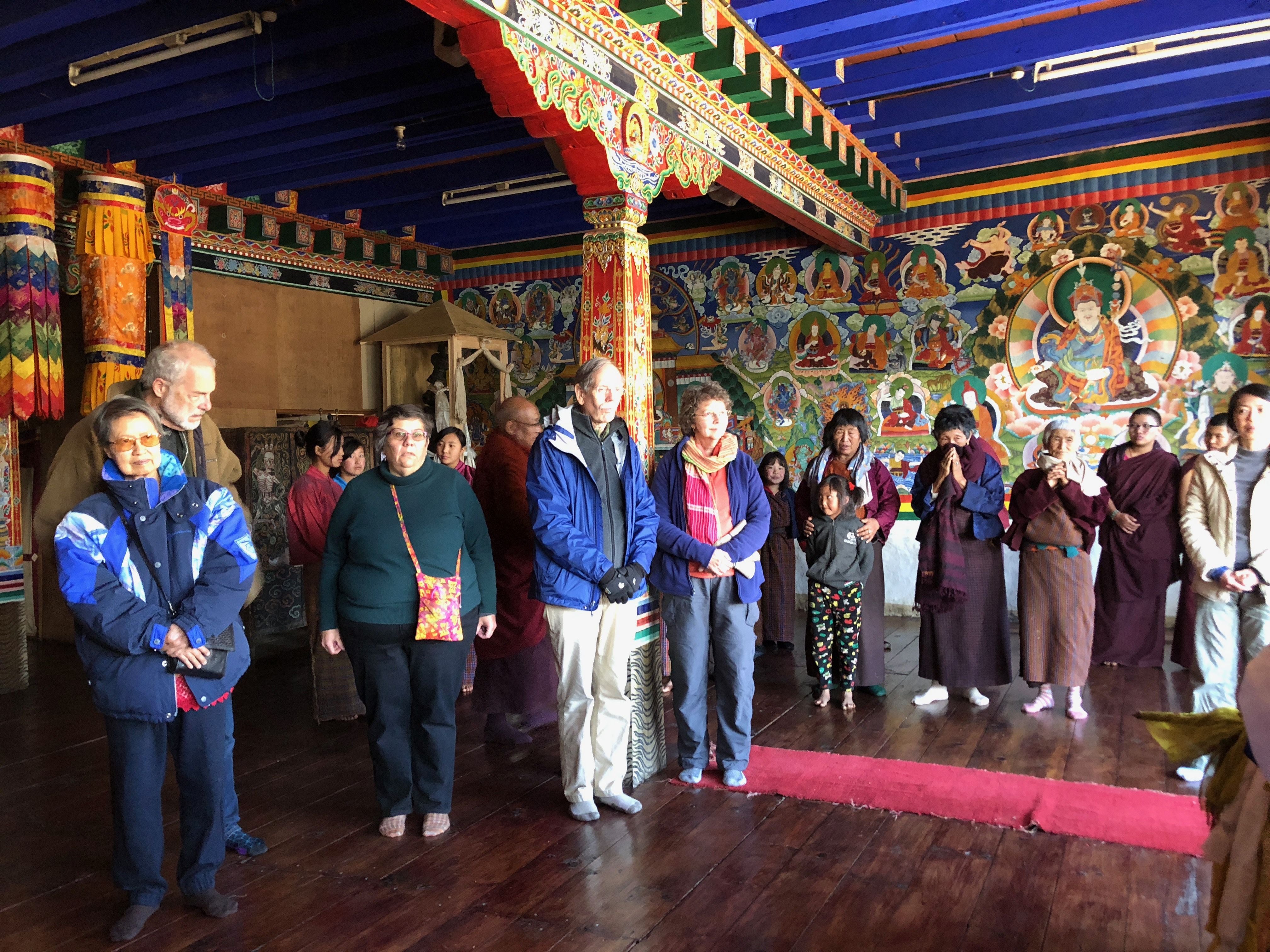
• Practices at monasteries & sacred sites
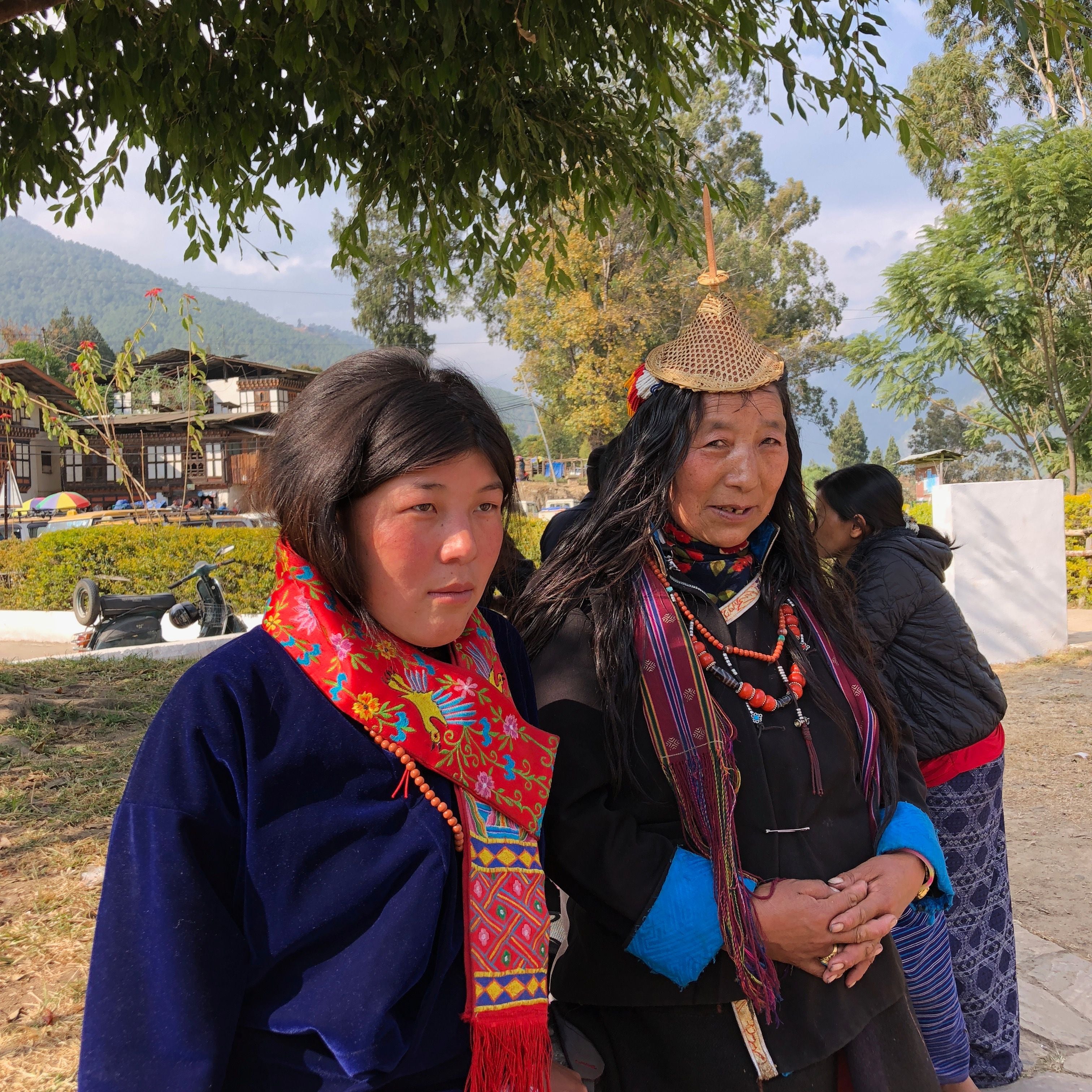
• Interact with Bhutanese people from all walks of life
• Daily meditation & instructions
• See artisans at work, visit handicraft centers & shop
• Experience authentic local cuisines
• Option of experiencing Bhutanese massage & hot stone bath
Payment
Payment for this program will be done in 2 parts:
• $1500 is payable with registration to secure your spot
• $4000 is due on January 2, 2026
Payments may be by check (preferred), or credit card or Paypal.
Cancellation Policies & Procedures
Please be aware of these cancellation policies & procedures before registering.
Before November 2, 2025
Cancellations received before November 2 will be refunded less a $50 administrative fee.
After November 2, 2025
There will be no refund on the $1,500 first payment after November 2. This is a requirement of the Bhutan travel agent, and there are no exceptions.
More than 30 days prior to February 27, 2026: last payment refundable except for $200 fee
15-30 days prior to February 27, 2026: 50% of the last payment will be refunded
8-14 days prior to start: 25% of the last payment will be refunded
Within 7 days of start: No refund
Cancellation must be made by email to shop@tibetanspirit.com . The date of the email will be considered the cancellation date. Please note that this cancellation policy applies in every instance. We do recommend that you purchase travel insurance. www.travelinsurance.com is a good place to start (although we do not have any connections with them at all).
Cost
The cost of this 12-day program is $5500 for double occupancy.
NOTE: If you are signing up by yourself, we will assign you a same-gendered roommate unless you request for a single supplement. A single supplement is $600
Cost Includes:
Local travel by road
3-star hotels on twin-sharing basis
Qualified & licensed English-speaking guide services
Experienced & safe drivers
All meals, bottled water at restaurants & throughout day
All entrances fees to museums, monuments & sites
All road permits
Government fee, royalty, taxes & surcharges, Bhutan visa
Cost Doesn’t Include:
International air travel to Bangkok/Singapore/Delhi/Kathmandu
Air travel from Bangkok/Singapore/Delhi/Kathmandu to Paro & back
Tips (tour-guides, hotel staff, drivers - generally $7-$10 per day)
Alcoholic beverages
Personal expenses for souvenirs
Donations & offerings to temples, shrines & monasteries
Contact us at: shop@tibetanspirit.com
Flying into Bhutan
The only way to fly into Bhutan is to fly with Drukair & Bhutan Airlines – the official airlines of Bhutan. They have flights from Delhi (DEL), Kolkatta (CCU), Singapore (SIN), Kathmandu (KTM) and Bangkok (BKK). The relative prices for flying from these four airports are – in order of most expensive to least: SIN, BKK, DEL, KTM and CCU. As you check prices for tickets from your home city to any of these five airports to catch the Drukair or Bhutan Airlines flight into Paro, Bhutan (PBH), do keep this factor in mind.
Aside from this factor, you might want to consider the relative ease and stress-level involved in transiting in any one of these four airports. In my opinion, in order of easiest/least stressful to hardest/most stressful: SIN, BKK, KTM, DEL & CCU.
Another factor to consider is whether you are required to have a visa to transit through the specific country you are thinking of. US passport holders currently do not need to apply for any visas to visit or transit through Nepal, Thailand or Singapore.
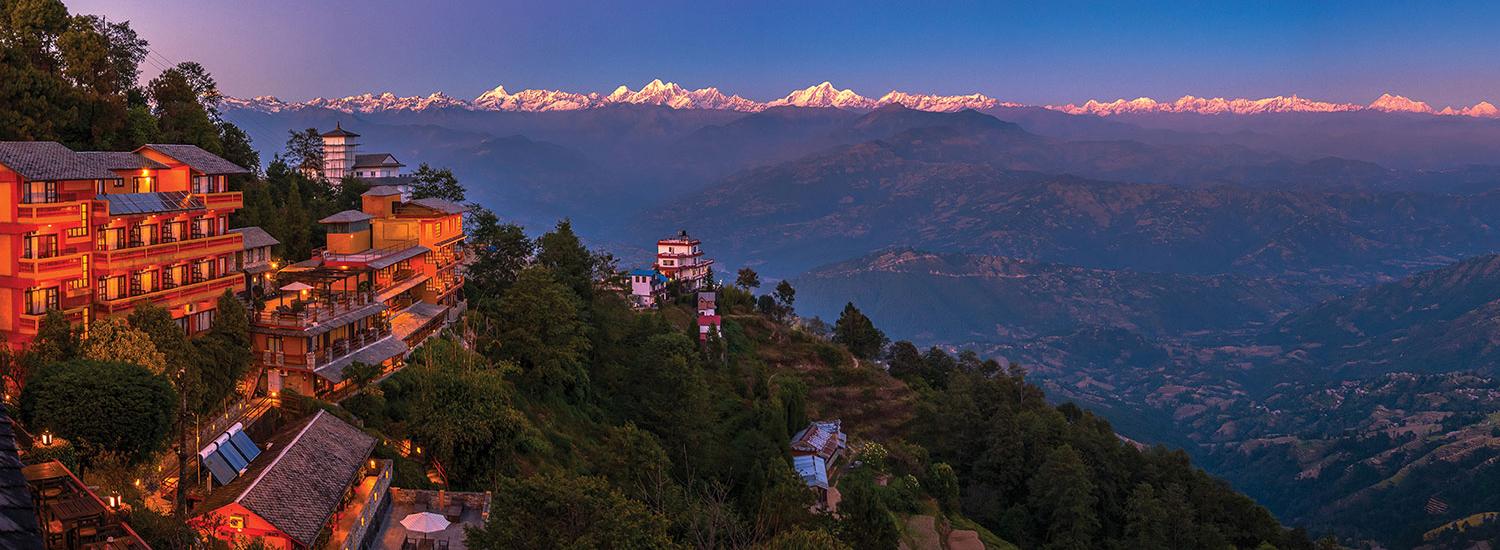
Finally, you might also want to consider staying a couple or three nights in one of these five cities when you start this journey, before flying to Bhutan on February 27. This will allow you to get over jetlag and be in a much better mental and physical state before arriving in Bhutan where you would have to quickly acclimate to the higher elevation in Bhutan. Dr. Lye has a soft spot for Nepal as a layover city – consider it!
Bhutan Itinerary
Day 1 (Feb 27)
Arrive in Paro (Lunch/Dinner)
All participants should arrange for their own international flight that arrives in Paro, Bhutan (Airport code: PBH). This will also be your departure airport on March 10. You will be met by our local guides and transferred to our hotel.
Day 2 (Feb 28)
Day in Paro (Breakfast/L/D)
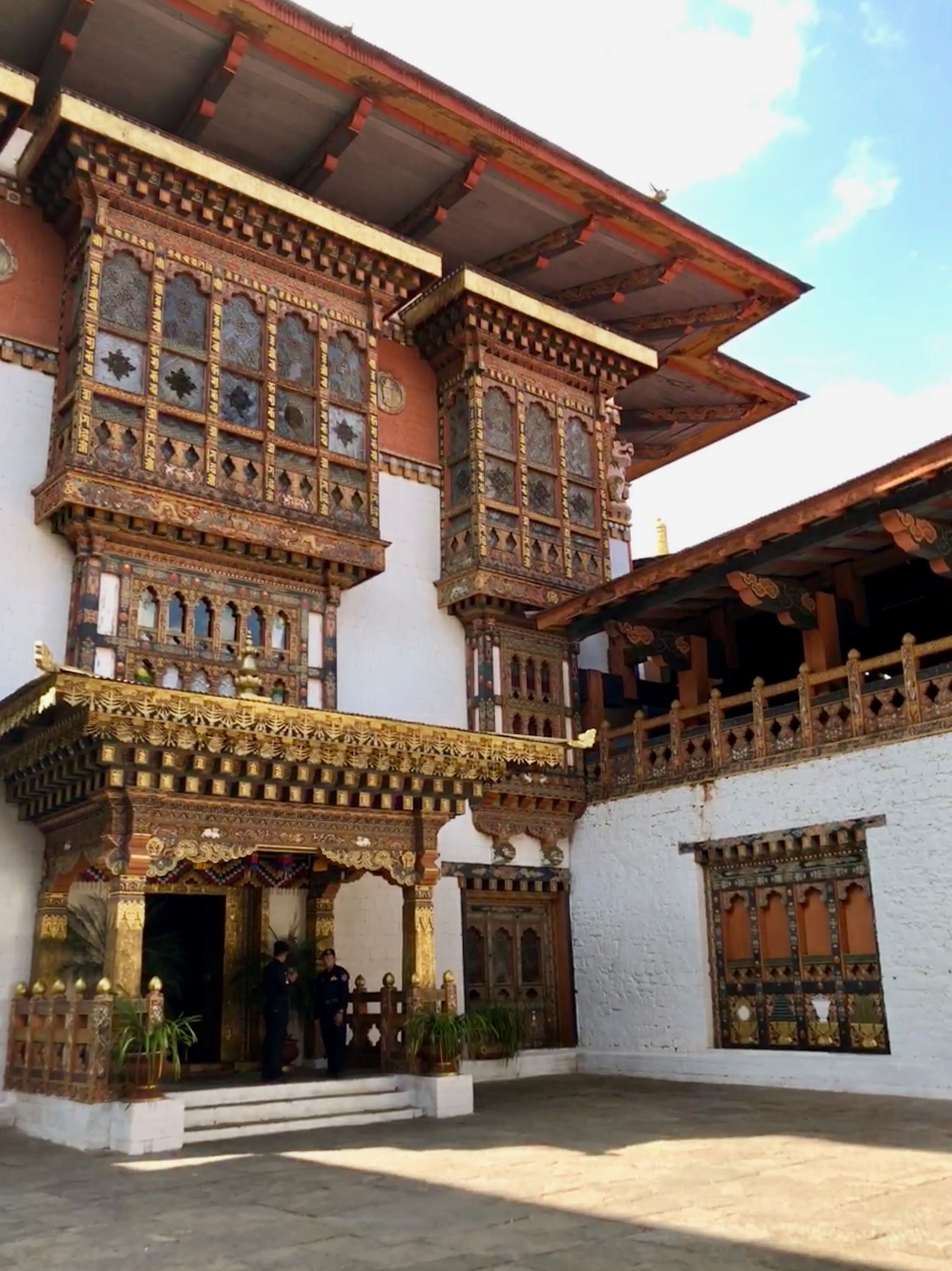
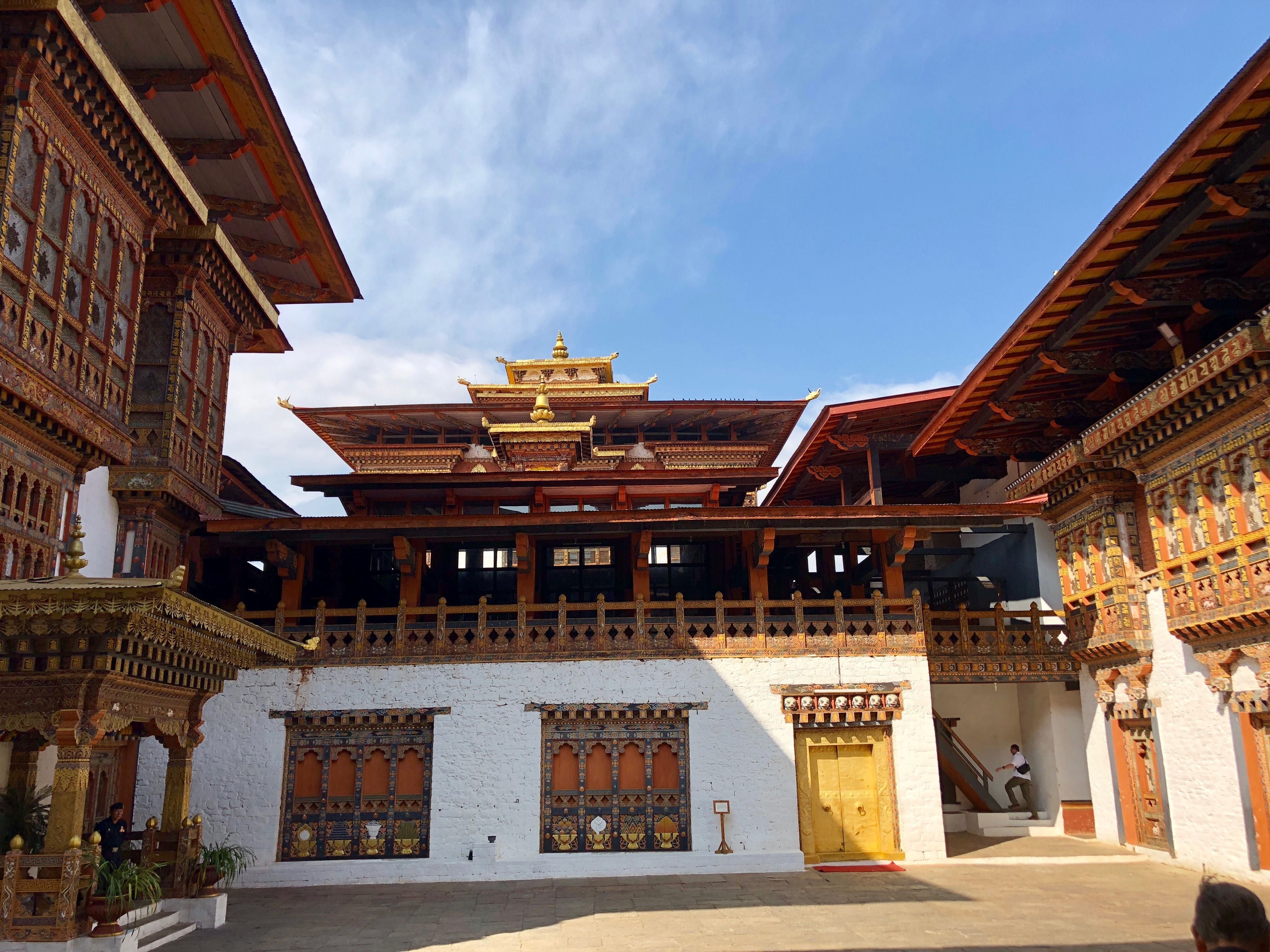
Although Paro is home to the famous Tiger's Nest Monastery, on our first full day, we will go to important sites such as Rinpung Dzong and Kyichu Lhakhang. Rinpung Dzong is an impressive fortress monastery known as dzong. Dzongs are distinctive to Bhutan, as they serve the dual purpose of religious and administrative center of each local area. Paro is also home to the only Drikung Kagyu Monastery in Bhutan which was founded a few years ago. As Dr. Lye has a close relationship with them, we will be visiting them and you will have the opportunity to meet with, and learn about the lives of the young monks at this new monastery.
Day 3 (Mar 1)
Drive to Thimphu (B/L/D)
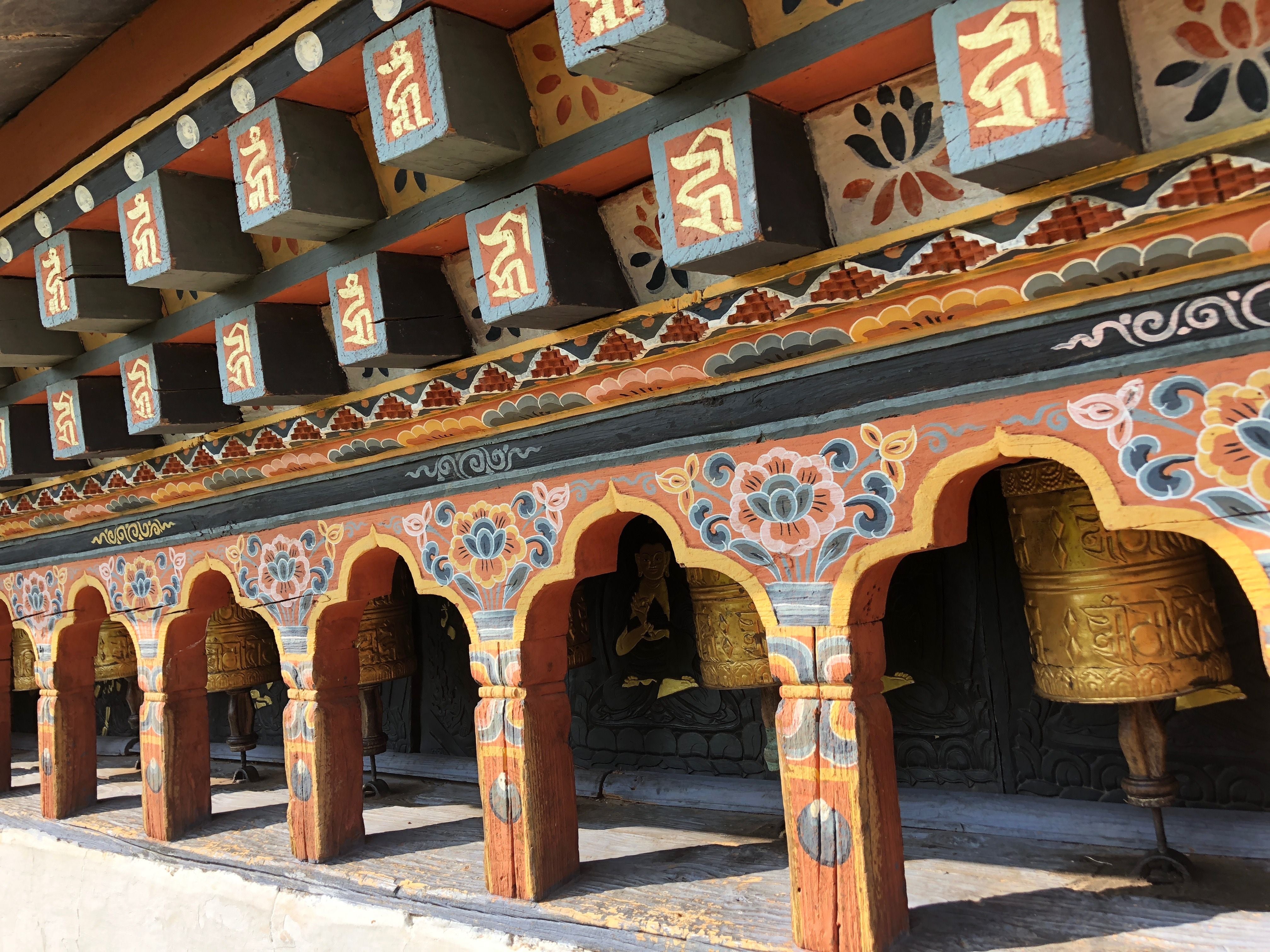
After breakfast we will drive to Thimpu, the capital city of Bhutan. The drive itself takes about an hour and a half to two, depending on traffic. Along the way we will stop to see the famous temple of the great 13th century siddha Tangtong Gyalpo, also known as Chak Zampa (Iron Bridge Maker). The bridge at this temple is believed to still be the original that he built.
Upon arrival at Thimpu, we will immediately go to Buddha View point where a 169’ Buddha statue known as “Dordenma” sits, bestowing his blessings on the entire valley of Thimphu. Other than the blessed statue itself, this is also a great spot for enjoying stunning panoramic views of the valley of Thimphu and its surroundings.
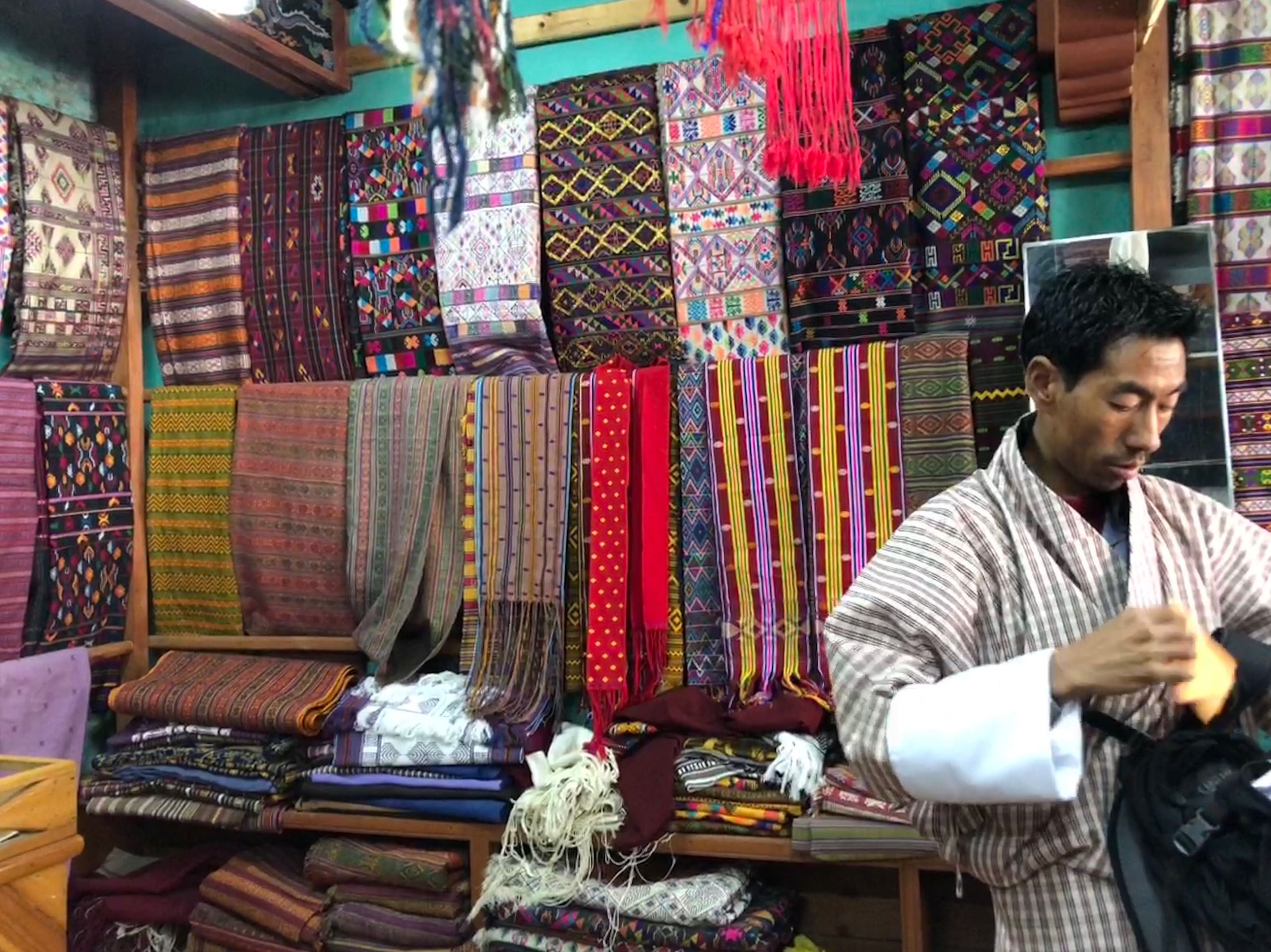
From Dordenma, we will go back into the valley to join local Bhutanese people in their daily shopping at the Centenary Farmer’s Market. One of Dr. Lye’s travel axioms is “If you want to know how people live in any area, go to their local market.” Located below the main part of Thimphu city, near the Wangchhu River, Thimphu’s market is by far the largest domestic market for the farmers in Bhutan. Farmers come from all over the country to sell their farm products in the market. The lower level is imported fresh produce while the upper level is reserved exclusively for Bhutanese-grown produce. Nearby, across a cantilever footbridge, Kuendeyling Bazaar, where there is a collection of stalls selling Bhutanese clothing, textiles and handicrafts.
In the afternoon we have a few choices. Depending on energy levels and other considerations, we may go to one or more of the following places: the National Textile Museum, the Motithang Takin Preserve or the National Folk Heritage Museum. Takins are a type of goat-antelope found only in the eastern Himalayas and are the national animal of Bhutan. Local legend has it that the national saint of Bhutan, Drukpa Kunley, miraculously created this hybrid animal. There are also a paper-making center and an incense-making facility. Bhutan is also known as "Land of Medicinal Plants" and so Bhutanese incense is prized throughout the Himalayan region. Whatever we don't get to, there will be an opportunity to do when we come back to Thimphu in about a week.
Day 4 (Mar 2)
Depart for Trongsa (B/L/D)
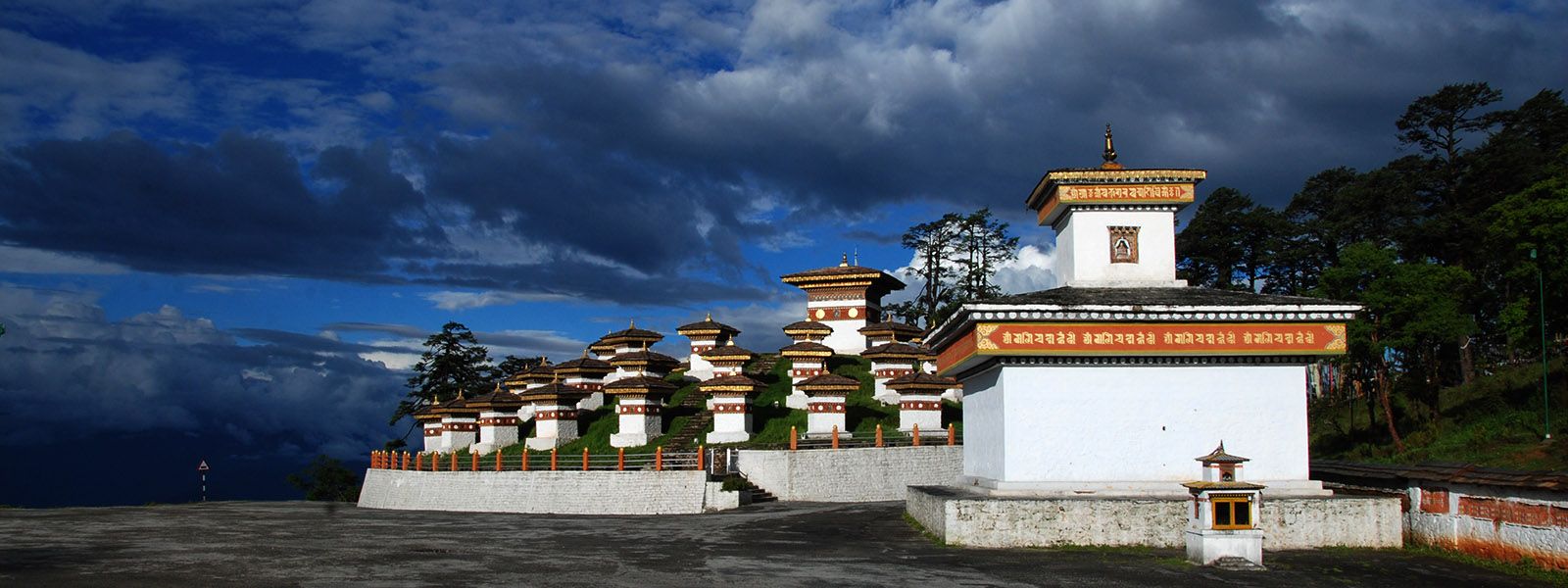
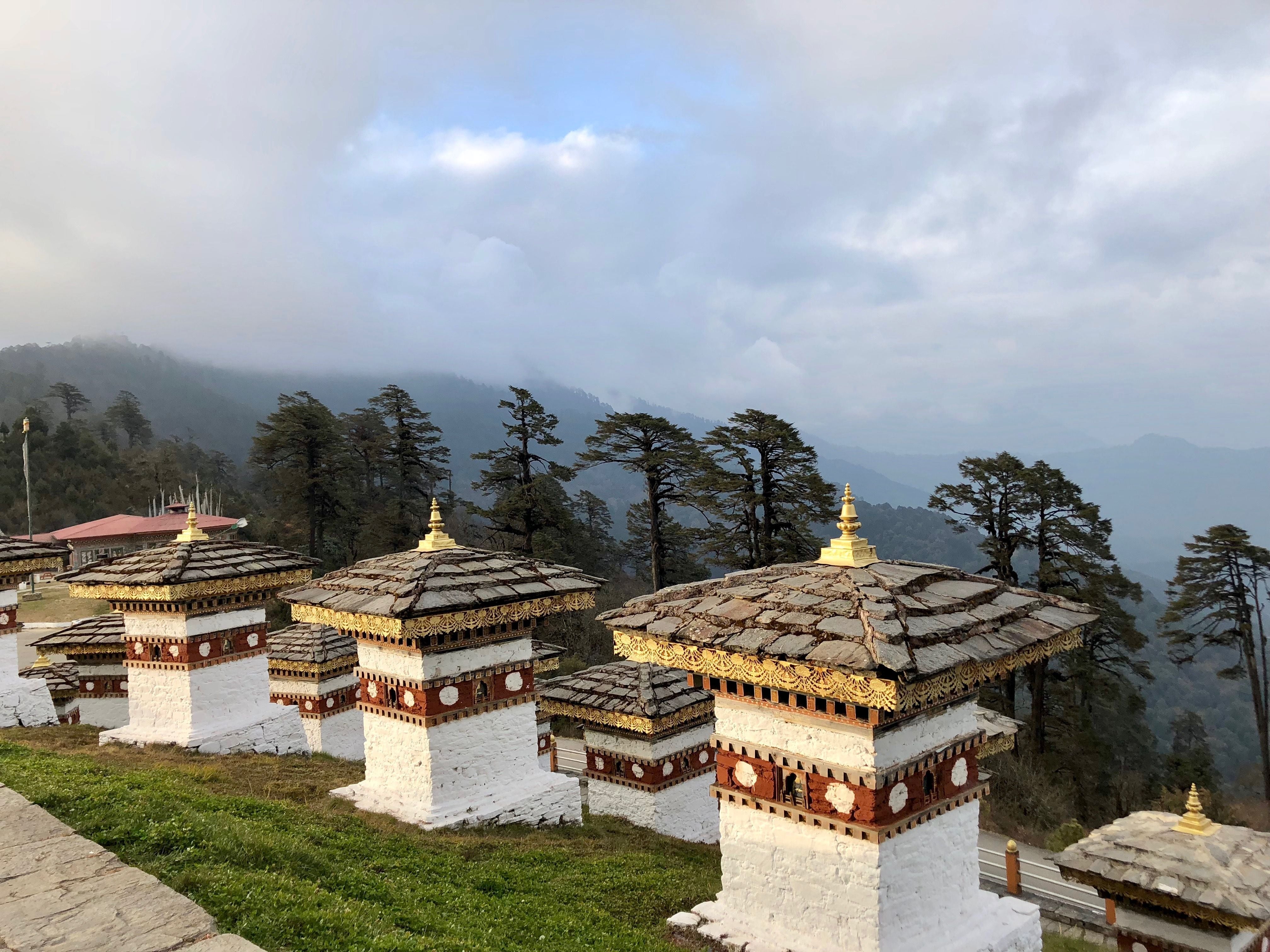
After breakfast, we will depart Thimphu early and drive through some of the most beautiful parts of Bhutan, driving over Dochula Pass (elevation 3088m) where on a clear day we can get a panoramic view of the Himalayan range. This is also where the present Queen Mother of Bhutan built 108 chortens/stupas dedicated to the spiritual welfare of all those who perished in border conflicts between Bhutan and India. This memorial seems to be often enveloped in fog and light drizzle, adding to the already other-worldly and tranquil nature of these spiritual monuments. Here, we will offer a cleansing-smoke ("sang") offering and hang some prayer-flags. Prayer-flags are offered to increase life-force, personal influence, and longevity.
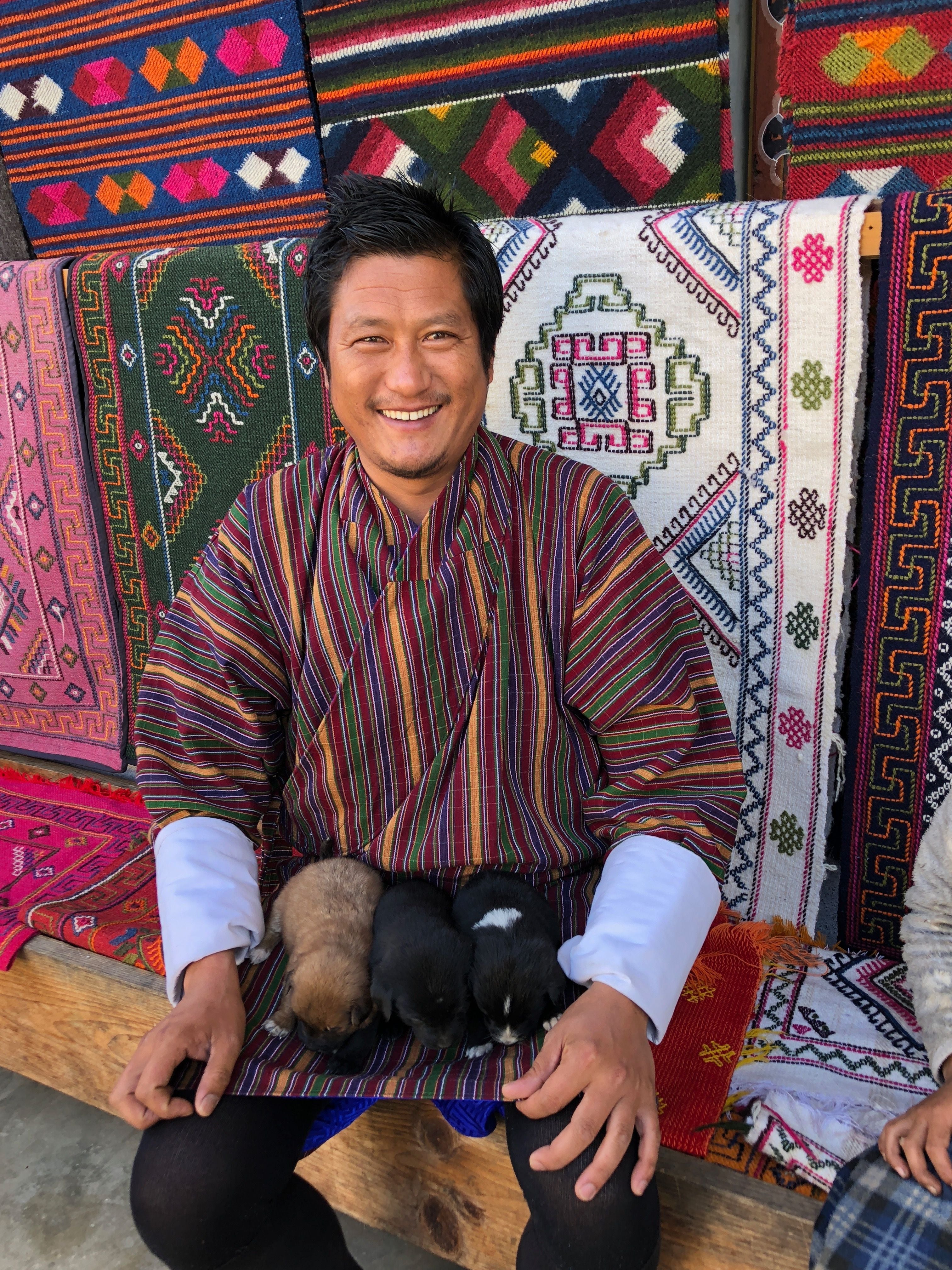
Trongsa is the ancestral home of the Wangchuck monarchy. Traditionally, each king of Bhutan has held the position of Trongsa pönlop (governor) before wearing the Raven Crown. Trongsa Dzong was built in 1644 and controlled by the Wangchuck dynasty until they became the rulers of all Bhutan in 1907. Occupying the only road that connected eastern and western Bhutan, all trade was controlled by this dzong. At Trongsa we will visit the Royal Heritage Museum. After this we will continue our journey to Bumthang passing through Yotong Pass (3400 m). Just before reaching Bumthang we will stop at Yathra Weaving Center at Zugney Village where we will see local weavers weaving yathra. Yathra is the name for the colorful, hand-woven woolen cloth that is produced in this region and wool used for yathra is sheep wool from sheep raised in Bumthang Valley. On arrival at Bumthang, we will check into our hotel in Bumthang and relax a little until it’s time to gather for our dinner.
Day 5 (Mar 3)
Depart for Bumthang (B/L/D)
We will depart fairly early for Bumthang – the spiritual heart of Bhutan – which is several hours away. But this is truly a case of how the journey itself is the goal for we will drive pass dense forests of oak and blue pine, through subtropical vegetation, and across the beautiful sceneries of rural Bhutan with scattered settlements far from the road. We will also pass through open meadows, and valley of yak herders and quaint villages. Lunch and refreshments will be served en route.
Bumthang is the spiritual heart of Bhutan. According to religious chronicles, in the year 746 AD, it is said that the great Indian master of Buddhism, Guru Rinpoche (also known as Padmasambhava) arrived here to exorcise a blood-thirsty demon from the then king of this area and converted the area to Buddhism, thus restoring peace and security to the region. Legend has it that Guru Rinpoche stayed in the valley to build more than 40 temples before continuing on to Tibet to assist in the establishment of Buddhism in Tibet. Guru Rinpoche is fondly addressed by Himalayan and Tibetan Buddhists as “the second Buddha.”
Depending on when we arrive and group energy, we may visit some holy sites in Bumthang when we arrive. Otherwise, we will take the rest of the day easy, with a late afternoon meditation & instructions session with Dr. Lye before taking our dinner.
Day 6 (Mar 4)
Bumthang (B/L/D)
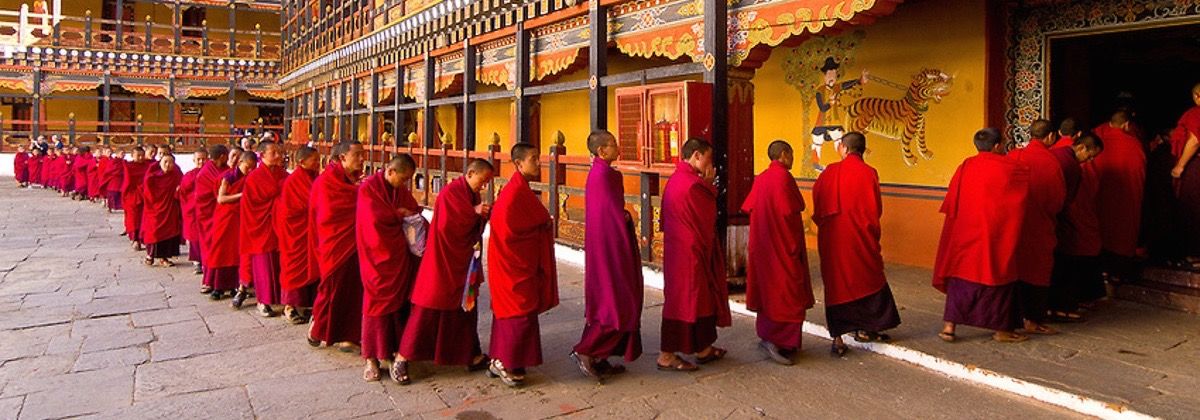
After breakfast, we will visit several important monasteries in Bumthang. The first monastery is Tamzhing Monastery which was first established in 1501 and considered the most important Nyingmapa monastery in Bhutan. Pema Lingpa (1450-1521), one of the most important Bhutanese saints established Tamzhing and today close to a hundred monks reside here. We will then visit the Kurjey Lhakhang which houses a rock that is said to have Guru Rinpoche’s body imprint after he subdued the powerful demon. Following this we will see Jakar Dzong, the White Bird Fortress. According to legend, when the lamas assembled in the mid-16th century to select a site for a monastery in this area, a big white bird rose suddenly in the air and settled on a spur of a hill. This was interpreted as an auspicious omen, and the hill was thus chosen as the site for a monastery and for Jakar Dzong. Today, this fortress is used as an administrative center of Bumthang Valley as well as the summer residence of Trongsa monks. Whenever possible, we will have short group practices at these monasteries.
After lunch, we will drive to Mebar Tsho ("Burning Lake"). This is location of the recovery of the "hidden treasures" (Tibetan: terma) of Guru Rinpoche by the great Bhutanese master, Pema Lingpa (1450-1521). We will do an offering practice here at this sacred site.
Day 7 (Mar 5)
A Day in Sumtrang (B/L/D)
After breakfast we will head to Sumtrang. Sumtrang was originally established in the 12th century by one of Kyoba Jikten Sumgön's most important disciples. Nyö Gyalwa Lhanangpa's family descendants continue to be custodians of this site. This is also where His Holiness the Drikung Kyabgön Chetsang is currently in retreat. Obviously, we will not be able to see His Holiness, but it is a great blessing to be able to visit Sumtrang and not only see it's spiritual treasures but also be in such close vicinity to His Holiness while he is in retreat. We will spend the entire day here doing practice and receiving teachings.
Day 8 (Mar 6)
Journey Back West (B/L/D)
Today we head back west and along the way we will visit Tharpa Ling Monastery, right outside Bumthang. Perhaps the greatest figure in the Nyingma lineage (aside from Guru Rinpoche) is Longchenpa (14th century). Longchenpa is the great synthesizer of the Dzogchen tradition and spent many years in retreat at what is now Tharpa Ling. As the road to the monastery can be inaccessible due to weather, we hope we have the right karma to visit this important site. If passage is not possible, then we will start driving towards Thimpu, but along the way visit Gangtey Monastery in Phobjikha Valley. Gangtey is the main seat of the Pema Lingpa tradition of the Nyingma lineage.
After arriving in Thimpu, there should be time to explore more of Thimpu on your own as we'll be staying right in the center of town.
Day 9 (Mar 7)
Paro (B/L/D)
After hopefully a good night's sleep in Thimpu, we depart for Paro where we will spend the rest of our time in Bhutant until we leave. On the way out of Thimpu, we will go visit the Bhutan Nuns Project headquarters. Dr. Lye is friends with the director of the project, a project under the auspices of one of the Queen Mothers. There we will hear first hand the Bhutanese monastic leadership's bold move to give full monastic ordination to women.
In Paro Valley there is a famous set of five chapels dedicated to the Five Tseringma Sisters. The Five Tseringma Sisters are a group of dharma protectresses who were spirit disciples of Milarepa. Some accounts say that they were also supernatural of consorts of Guru Rinpoche. There is a tradition in Bhutan to visit all five chapels in one day. While this is quite doable by Bhutanese standards we will go to the five chapels over two days.
Day 10 (Mar 8)
Second Day in Paro (B/L/D)
After breakfast, we will continue where we left off with the chapel pilgrimage. It is Dr. Lye's intention to perform the guru yoga of Milarepa at each of these chapels.
In the early evening, for those who want to, there is an optional hot stone bath excursion to a traditional Bhutanese spa. These "spas" are rustic, but good. We should make tonight an early night because tomorrow, bright and early, we head to The Tiger's Nest.
Day 11 (Mar 9)
Ascending Tiger's Nest (B/L/D)
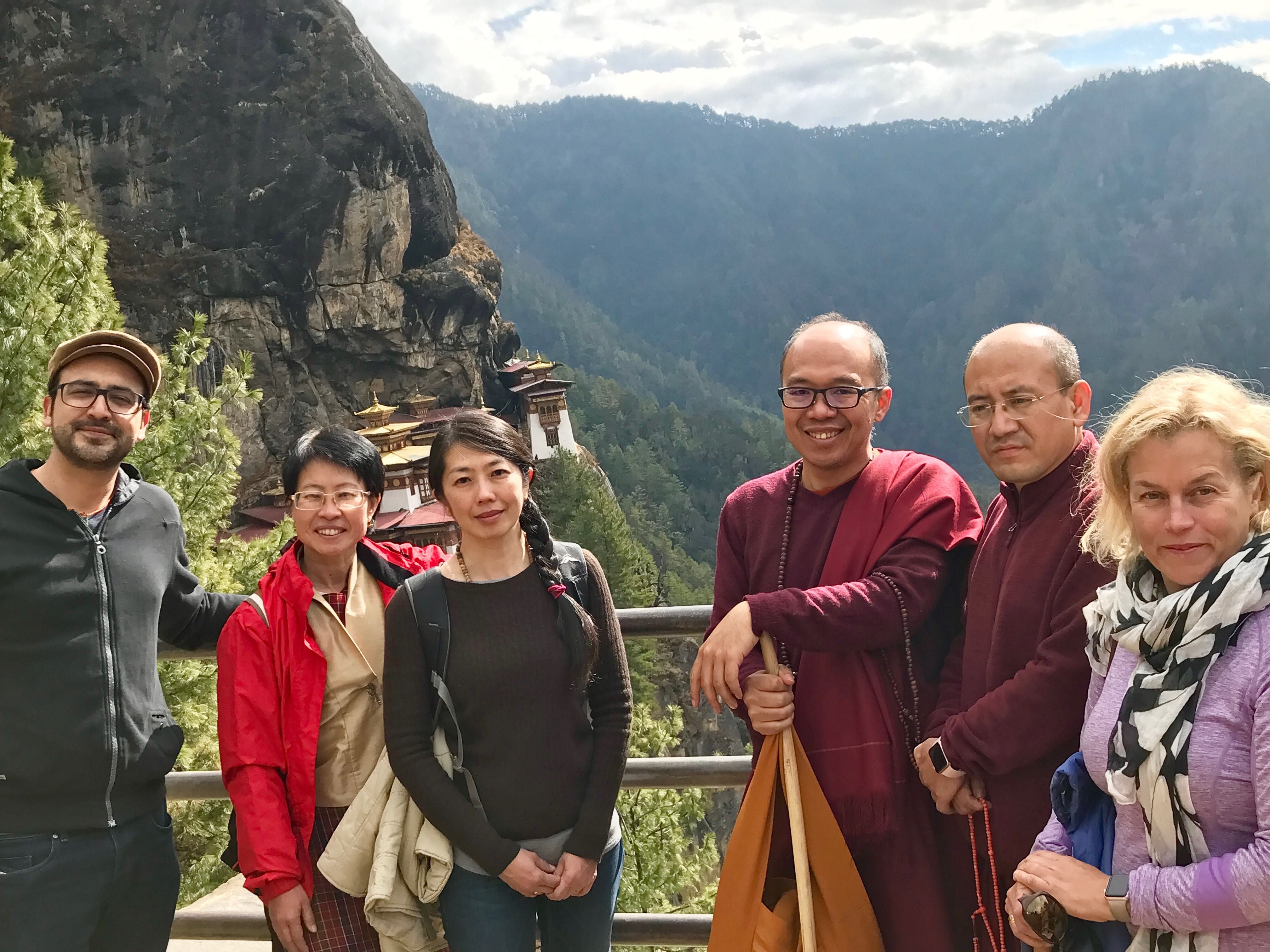
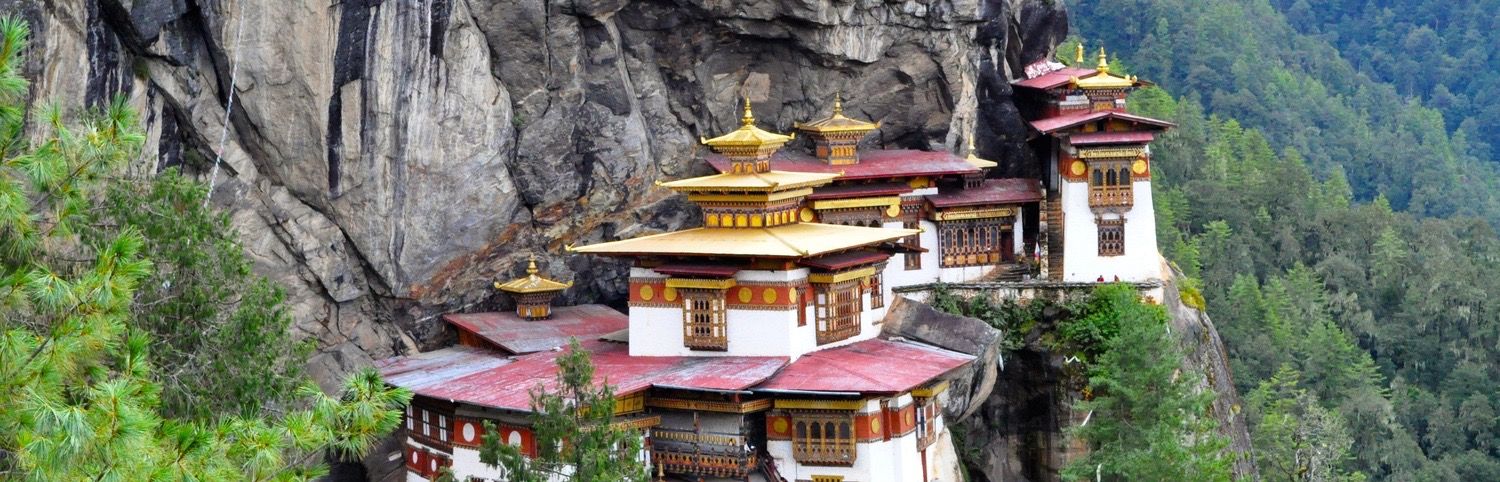
Today we will hike up to Taktsang: The Tiger’s Nest. This is probably the most recognized landmark of Bhutan around the world. It’s a wonderful day’s outing to this stunning site. Some of you may choose to hire a pony to get up there as the hike up to Taktsang can be steep and takes around 3 hours. But it is a well worth effort! Taktsang Monastery is built on a ledge of a cliff that stands 800m above Paro Valley. Legend has it that the Guru Rinpoche flew here from Nepal on the back of a pregnant tigress and meditated in a cave that this monastery is built around. Guru Rinpoche is said to have meditated in this cave for three years, three months, three weeks, three days and three hours in the 8th century.
If there is enough interest, we will arrange for another hot stone bath after a day of hiking. Your muscles will thank you!
Day 12 (Mar 10)
Depart for Home (B)
After breakfast, we depart for Paro International Airport and thus begins the journey home – and perhaps the beginning of a deeper journey inward for the rest of our lives!
Have questions? Contact us at: shop@tibetanspirit.com
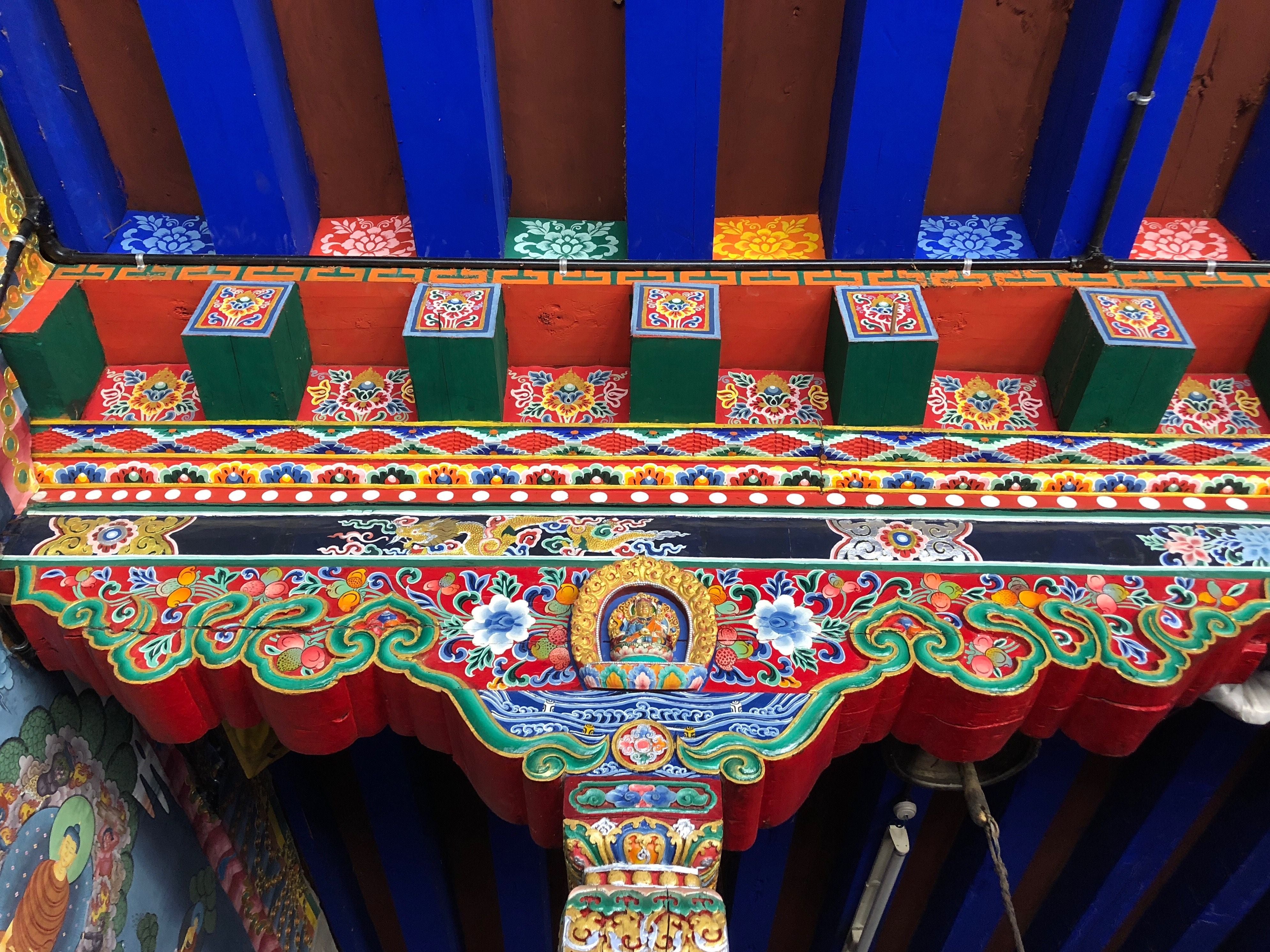
a glimpse of Bhutan